Why Modern Schools Need Real-Time Parent Communication: A Complete Guide
Staying informed about a child’s school life has always been important for parents, but in many Indian modern schools this communication has not been easy. IParents often find out about an absence, a missed homework assignment, or a low exam score only after several days. By the time information reaches them, the situation has already […]
Why Modern Schools Need Real-Time Parent Communication: A Complete Guide
Staying informed about a child’s school life has always been important for parents, but in many Indian modern schools this communication has not been easy. IParents often find out about an absence, a missed homework assignment, or a low exam score only after several days. By the time information reaches them, the situation has already […]
Request for Callback
Staying informed about a child’s school life has always been important for parents, but in many Indian modern schools this communication has not been easy. IParents often find out about an absence, a missed homework assignment, or a low exam score only after several days. By the time information reaches them, the situation has already escalated. Traditional communication methods like phone calls, handwritten diaries, and printed circulars are slow, inconsistent, and often get misplaced. This lack of timely communication not only confuses parents but also reduces their trust in the school system.
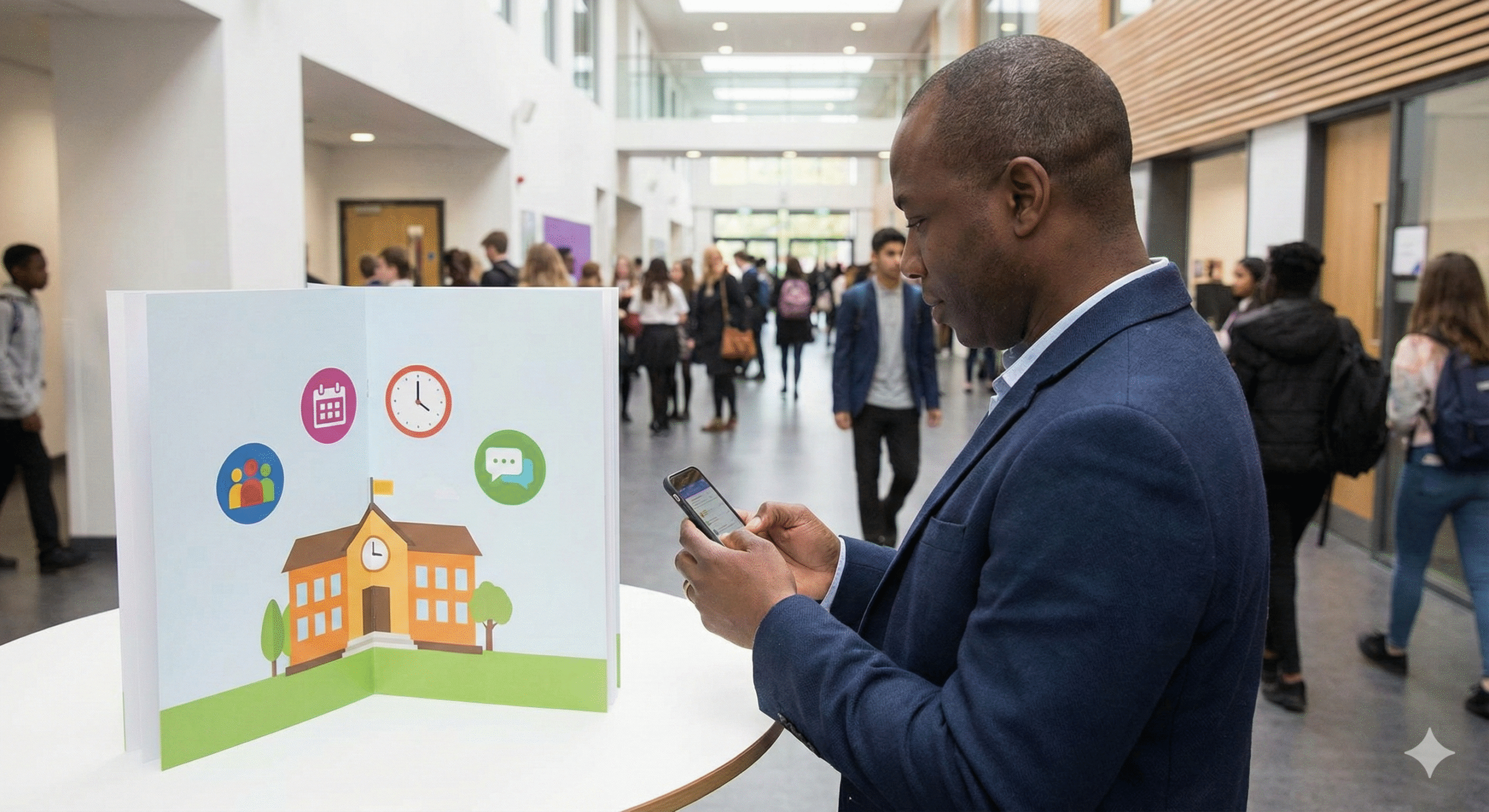
Modern school ERP systems have changed this experience by giving parents a single digital window into their child’s school life. These systems offer a portal or a mobile app through which parents instantly receive updates about attendance, homework, exams, events, and other important information. Everything they need is available in one place, helping them stay connected and confident about their child’s progress.
A school ERP platform brings transparency by allowing parents to view the same information that teachers and administrators enter. For example, when a school uses a parent portal built into the ERP, a teacher can update attendance or homework once, and all parents receive the information immediately. This reduces the need for phone calls, manual reminders, and multiple communication channels. One announcement can reach every parent at the same time, ensuring that no one misses out. Research from school ERP providers shows that many schools are adopting ERP systems because today’s parents want real-time updates, and mobile apps deliver information instantly.
Parameter
Before ERP
After ERP
Improvement
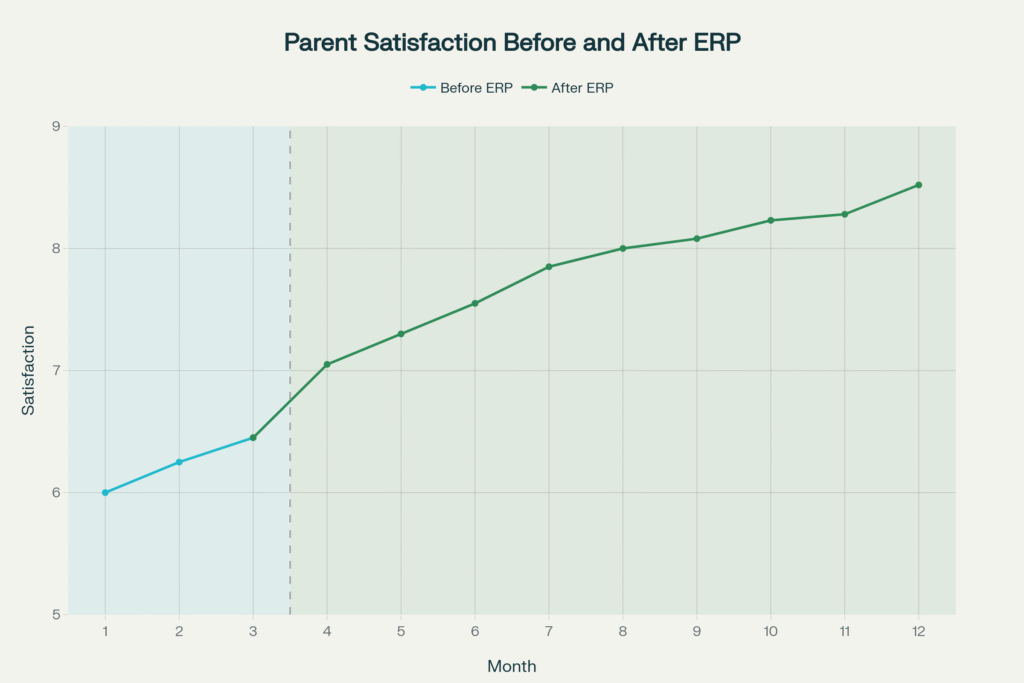
Parent Satisfaction
50%
90%
+40%
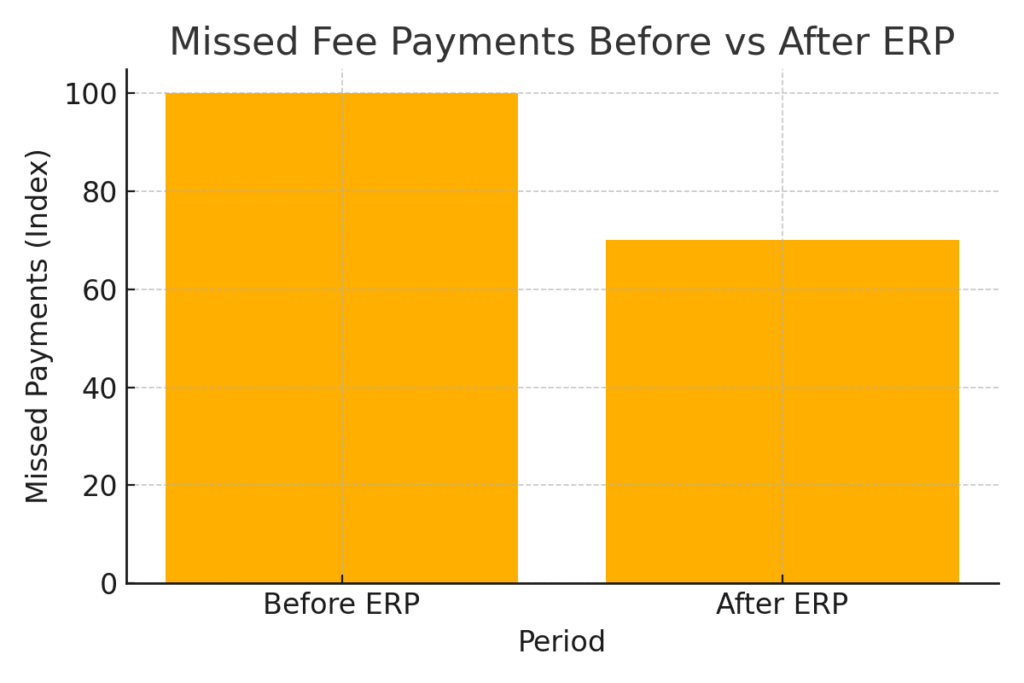
Missed Fee Payments
100% baseline
70%
-30%
Teacher Communication Time
10 hrs/week
5 hrs/week
-50%
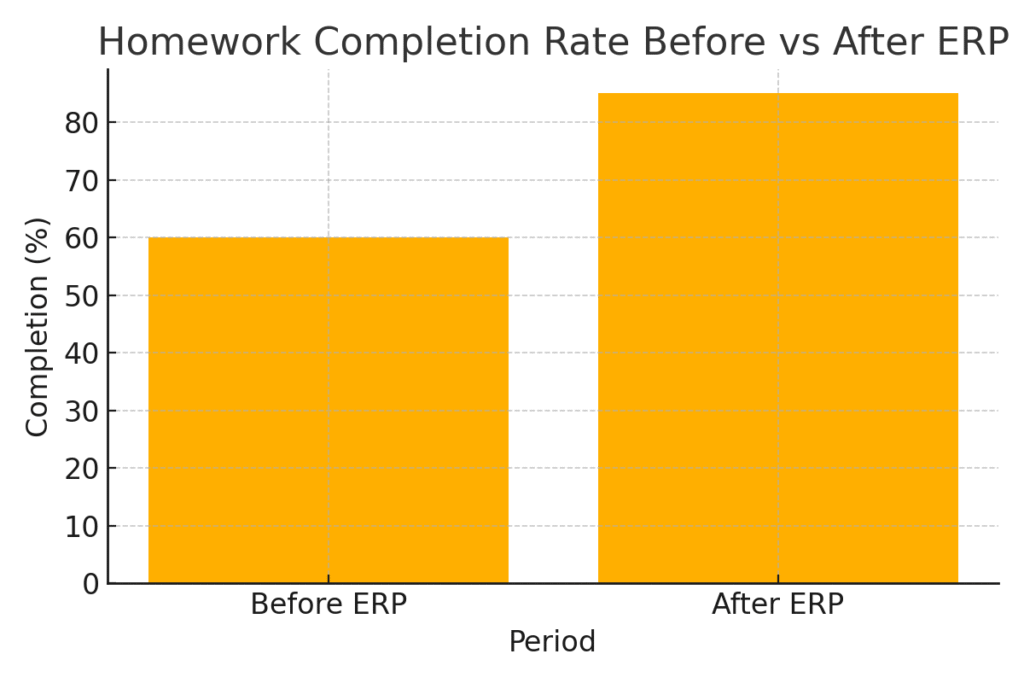
Homework Completion
60%
85%
+25%
Data Accuracy
60%
95%
+35%
Response Time to Parent Queries
48 hrs
12 hrs
4X Faster
A modern ERP dashboard gives teachers and administrators a single place to manage all student data. When attendance or exam results are entered into the system, the ERP automatically sends notifications to parents. This centralization eliminates confusion, reduces errors, and ensures that everyone sees the most updated information. Parents receive alerts through multiple channels—WhatsApp, SMS, email, or mobile app notifications—depending on what they prefer. Even if someone misses an email, they are likely to see a WhatsApp message or app alert. This multi-channel approach ensures that important updates, such as attendance notifications or fee reminders, are never missed.
Real-time alerts play a major role in improving the parent–school connection. If a child is marked absent, the system can immediately send an SMS or push notification to the parents. Teachers can upload homework or exam details into the digital diary, and parents see it instantly on their mobile app. Even the school calendar, including holidays, events, and exams, can be updated on the portal so parents receive reminders well in advance. Some ERPs even allow parents to send messages directly to teachers or school administrators. This two-way communication is secure, quick, and keeps both sides engaged without the need for separate chats or multiple WhatsApp groups.
Many schools using ERP systems report clear improvements. For example, studies show that missed fee payments reduce by nearly 30% because parents receive timely reminders. Overall parent satisfaction can increase by up to 40% because communication becomes more reliable, transparent, and organized. When parents trust that a school keeps them informed, they respond quickly and support school decisions more actively.
Channel
Usage Percentage
Purpose
Mobile App Notifications
90%
Daily updates, homework, attendance
WhatsApp Alerts
70%
Quick notices, emergency updates
SMS
85%
Attendance alerts, urgent communication
Email
60%
Detailed reports & circulars
A good parent-communication app typically includes features such as real-time notifications, a digital diary, push notifications, an event calendar, instant messaging, fee management, and report cards. All these features come together in a single platform so parents do not need to juggle multiple apps, emails, or paper notices. Everything is available in one simple interface. Schools that have adopted such systems confirm that parents and students receive homework, results, and activity reminders instantly, saving everyone time.
The admin dashboard on the school side makes communication easier at scale. Administrators can send bulk messages, schedule alerts, and even track which parents have read the notifications. This ensures complete transparency and helps the school verify that information has reached the right people. Having a message history also becomes useful during disputes because the school can show when and to whom updates were sent. This increases accountability and improves the reliability of the communication process.
Of course, the effectiveness of parent–school engagement is not just about technology. Schools must follow certain best practices to make communication meaningful. It is important to be proactive instead of waiting for parents to ask. Sending updates early—such as reminders about attendance, homework, or behavioral concerns—helps prevent problems from growing. Notifications should be used wisely so that parents do not feel overwhelmed. Important alerts like exam schedules or sudden announcements should carry a clear subject line so parents immediately understand the purpose.
The school calendar must always be updated so families can plan ahead for events like PTMs, sports days, and examinations. Schools should also encourage parents to ask questions through the app. When they feel heard, trust increases naturally. At the same time, not all parents may be comfortable using smartphones, so ERP systems must support SMS and email as alternatives. The goal is to ensure that every parent receives important notices regardless of the device they use.
Communication must also be positive and clear. Even when sharing concerns, the tone should be supportive. For example, instead of a blunt message like “Homework is missing,” teachers can say, “Kindly help your child complete today’s math homework.” This encourages parents to participate in their child’s learning rather than making them anxious. Training also plays a big role. Teachers, staff, and parents should receive a simple demo of how to use the portal. Most platforms are intuitive and require minimal training, but a short orientation can ensure smooth usage from the start.
The impact of real-time communication can be felt in several ways. First, it builds trust. Parents feel assured that the school is actively monitoring their child and keeping them informed. Second, issues get resolved faster. If attendance drops or performance declines, parents are notified immediately, allowing them to take corrective action sooner. Third, parent satisfaction increases because they never miss important updates, which makes them more supportive and engaged. Fourth, administrative efficiency improves because teachers save time on manual communication, paperwork, and repeated follow-ups. Automated reminders reduce errors and free up staff to focus on academic activities. Fifth, schools manage fee collection more effectively because parents receive timely due-date notifications. Sixth, the school’s reputation improves because technology-driven communication makes the school appear organized and modern. Finally, digital communication helps schools reduce paper usage and contribute to eco-friendly practices.
Table 3: Features with Their Impact on School Efficiency
Feature
ERP Benefit
Impact
Real-Time Attendance Alerts
Automatic notifications
60% reduction in parent anxiety
Digital Homework Diary
One-click homework upload
25% rise in homework completion
Exam Result Publishing
Instant access to marks
35% faster intervention
Fee Reminder Alerts
Automated due-date reminders
30% fewer missed payments
Event Calendar
Pre-scheduled updates
50% fewer missed events
Two-Way Messaging
Direct conversation
65% faster query resolution
Modern ERP systems is must be used for Modern Schools are cloud-based, which means parents and teachers can log in from anywhere. Whether a parent is at work or traveling, they can check their child’s updates instantly from their phone. This flexibility ensures that parents remain connected to school activities at all times. Many ERPs even offer a dedicated app that works on all devices, further improving convenience.
When choosing and implementing the right ERP communication system, schools should focus on centralization. Instead of using multiple channels like WhatsApp, email, or printed circulars, all communication should flow through the ERP portal. Many ERP providers offer integrated parent portals, so schools can easily adopt them without needing separate tools. Training is essential to ensure teachers understand how to use attendance and messaging features. Parents should also be guided on how to log in and customize notifications. Clear communication policies should be set—such as using SMS only for urgent alerts and sending detailed updates through email or the app.
Feedback from parents must be taken seriously. Their suggestions can help improve the frequency, format, or clarity of messages. Over time, this makes the system more effective and user-friendly.
Parents often have several questions about how ERP systems work. They want to know why communication is important, what a parent portal is, how messaging works, and whether the system is secure. A school ERP portal is simply an online platform where teachers upload attendance, homework, and exam results, and parents check them from mobile or computer. Messages are private and secure, with enterprise-level encryption. Data remains accessible only to authorized staff and the child’s parents. ERP systems also allow group communication, so a school can send one notice to hundreds of families instantly. Most apps store message history so parents can review updates they may have missed. Even parents without smartphones can still receive SMS alerts.
Parents can also see exam results and report cards directly through the portal, receiving instant notifications when results are published. This convenience reduces anxiety and keeps families informed throughout the academic year. Schools usually promote app usage by introducing it during meetings, sharing login links, and sending demo videos. Once parents experience the convenience of having all information in one app, adoption rates usually rise quickly.
Traditional vs. Modern ERP Communication
This table summarizes the first few paragraphs contrasting the old way versus the new way.
Feature/Aspect
Traditional Methods (Phone calls, diaries, circulars)
Modern ERP Systems (Apps, Portals, Dashboards)
Speed of Information
Slow; parents often find out days late.
Instant/Real-time updates.
Reliability
Inconsistent; circulars get misplaced.
High; centralized and recorded history.
Transparency
Low; lacks a “single window” view.
High; parents see what teachers enter instantly.
Channels Used
Manual calls, handwritten notes, paper.
Multi-channel: App, SMS, Email, WhatsApp.
Impact on Trust
Confuses parents and reduces trust.
Builds trust through constant connection.
So, an ERP-based communication system greatly improves the relationship between parents and schools. When communication is clear, timely, and transparent, parents trust the school more and support their children more effectively. Schools that invest in modern communication tools see better parent engagement, stronger reputation, and smoother administrative operations. Real-time communication ensures that no parent feels out of the loop and every child receives the timely support they need for success.
Essential Features of a Parent Communication App
This table summarizes the section detailing what a good app should include.
Feature Module
Purpose and Benefit Mentioned in Text
Real-time Alerts
Immediate notification for attendance (absenteeism) or sudden announcements.
Digital Diary
Teachers upload homework or exam details; parents see it instantly without paper.
Fee Management
Sends timely due-date reminders, reducing missed payments by nearly 30%.
Event Calendar
Helps families plan ahead for PTMs, sports days, and holidays.
Two-Way Messaging
Secure, private communication between parents and teachers without needing separate WhatsApp groups.
Report Cards/Results
Instant publishing of exam scores, reducing parent anxiety.
Adruvex delivers the exact “single window” experience modern schools need. It confirms availability of all previously discussed features: real-time parent collaboration, QR-code based attendance, automated fee reminders, and digital homework diaries. The platform centralizes student data, transport, and inventory into one cloud-based system, ensuring parents and teachers stay instantly connected without the chaos of multiple apps.
2. Driving Educational Change
For institutes seeking a shift from traditional paper-based methods, Adruvex offers a “future-ready” infrastructure. By integrating AI-powered analytics and secure cloud access, it transforms how schools handle data—making operations transparent and accessible from anywhere, which directly solves the trust and communication gaps parents often face.
3. Take a Demo
The solution is live and ready for deployment. You can request a free demo directly on their website to see the admin dashboard and parent app in action before committing.
4. Our Verdict
For schools serious about modernization, Adruvex appears to be a robust, scalable choice. Its focus on automating mundane tasks (like fee collection) while enhancing the parent-school bond through real-time alerts makes it a highly practical investment for rebuilding trust and efficiency.